
16th November 2026
43rd Session of the SME Development Sub-Council Led by RA Minister of Economy Gevorg Papoyan
Other
Sub-Council
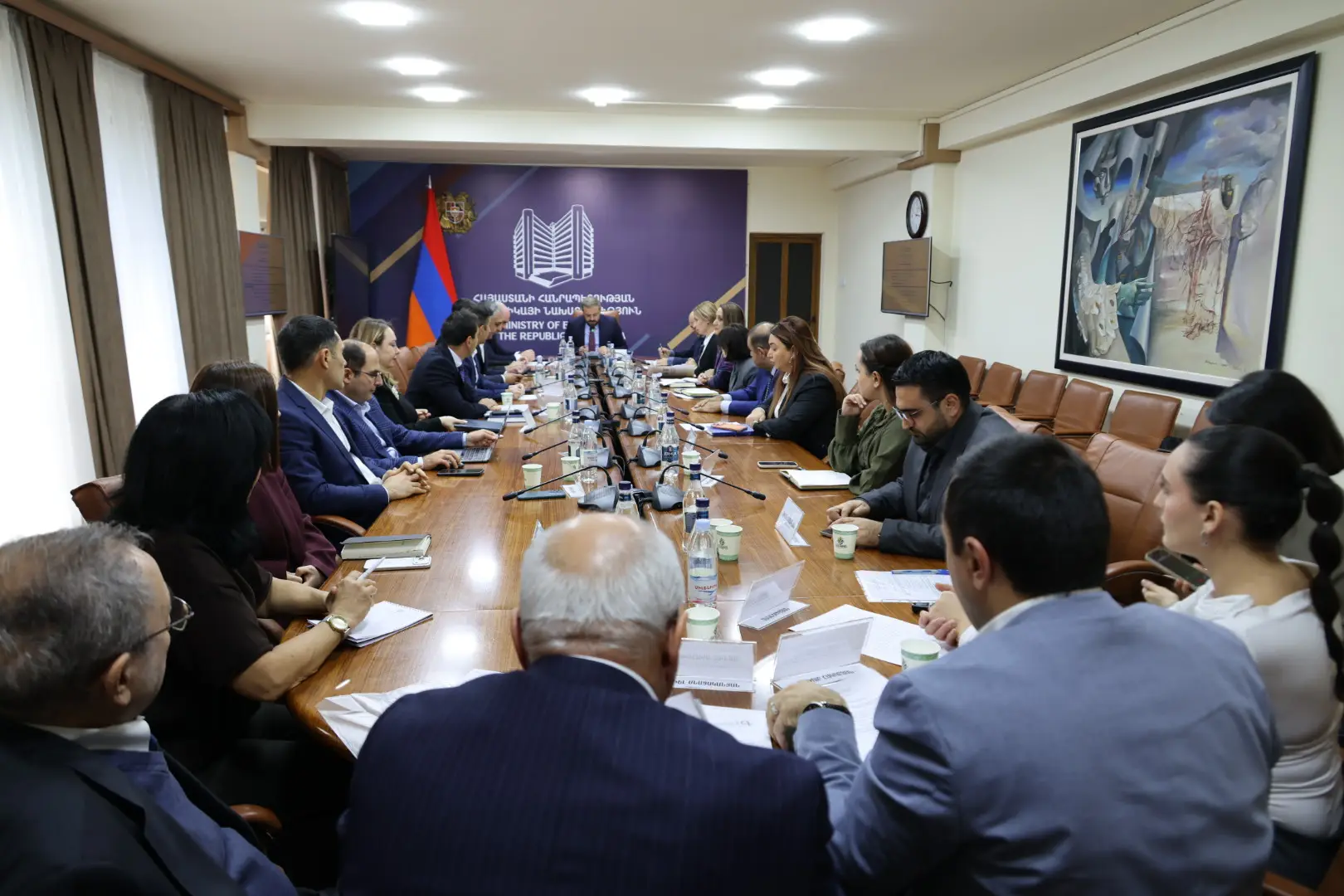
On November 13, the 43rd meeting of the SME Development Sub-Council was held under the chairmanship of the Minister of Economy of the Republic of Armenia, Gevorg Papoyan.
The meeting focused on two agenda items aimed at improving the business environment: challenges arising from the implementation of the “Parental Hour” provisions under the Labour Code of the Republic of Armenia, and parking-related difficulties faced by businesses using trucks for business-to-business (B2B) deliveries.
The first agenda item addressed the “Parental Hour” provisions stipulated in Article 207.1 of the Labour Code of the Republic of Armenia and the challenges employers face in implementing these regulations.
The issue was presented by Vladimir Shatverov, representative of the TUBI Business Support Foundation. Sergey Nersesyan, representative of the Republican Union of Employers of Armenia, also shared his position and recommendations during the discussion.
Following the discussion, it was agreed to collect the opinions and recommendations of Council members and submit them to the Ministry of Economy for consideration when formulating its position on the legislative package developed by the Ministry of Labour and Social Affairs of the Republic of Armenia.
The second agenda item focused on parking-related challenges faced by businesses using freight vehicles for business-to-business (B2B) deliveries.
The issue was presented by Eduard Kirakosyan and Daniel Mnatsakanyan, representatives of the Union of Manufacturers and Businessmen of Armenia. Sergey Nersesyan, representative of the Republican Union of Employers of Armenia, as well as Lusine Sargsyan and Lusine Mnatsakanyan, representatives of the American Chamber of Commerce in Armenia (AmCham Armenia), also contributed to the discussion.
The discussion addressed the challenges businesses face in the delivery and unloading of goods, as well as potential solutions to these issues.
Participants shared a range of views and recommendations aimed at improving existing regulations and creating more favorable conditions for businesses. In particular, they emphasized the importance of providing businesses with sufficient time before the proposed regulatory changes enter into force, allowing them to prepare for the new requirements and ensuring a smooth transition to their implementation.