
2026
Regarding Issues Arising from the Regulations on “Parental Leave Hours”
Labor Code
Ongoing
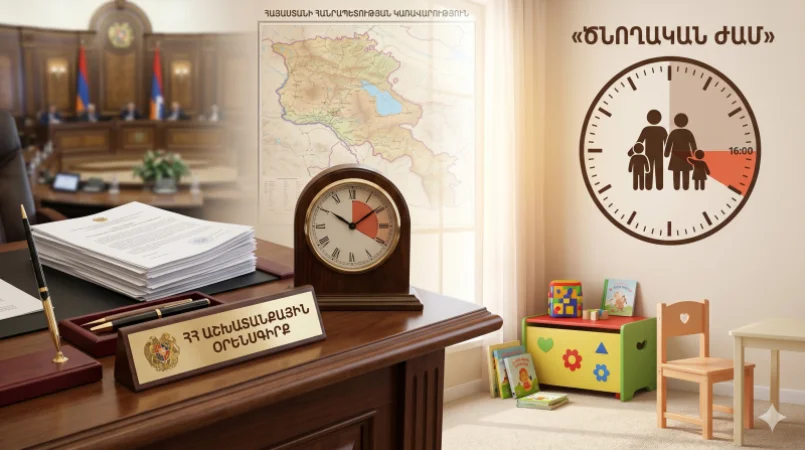
On July 10, 2026, the RA Law “On Making Amendments and Additions to the Labour Code of the Republic of Armenia” entered into force, introducing provisions on parental hours into the RA Labour Code.
In particular, Article 207.1 of the Labour Code stipulates that parental hours are granted to working parents for the purpose of caring for and raising their children, participating in their educational activities, or fulfilling other responsibilities in the best interests of the child. Working parents (including foster parents, adoptive parents, and guardians) are entitled to use parental hours by being absent from the workplace.
The following rules have been established for granting parental hours:
1. Parents with up to two children under the age of 12 (including foster parents, adoptive parents, and guardians) are entitled, at their discretion, to a maximum of 30 minutes per day.
2. Parents with three or more children under the age of 12 (including foster parents, adoptive parents, and guardians) are entitled, at their discretion, to a maximum of one hour per day.
3. Parents of a child under the age of 18 with severe or profound functional limitations (including foster parents, adoptive parents, and guardians) are entitled, at their discretion, to a maximum of one hour per day, regardless of the number of children.
Furthermore, parental hours are granted on the basis of a written application submitted by the employee, and the employer is not entitled to refuse the request.
The law also stipulates that parental hours are included in working time, and the employee's basic salary is maintained during this period. For employees paid on a piece-rate basis, the average salary is maintained, excluding bonuses.
During discussions with business representatives, several concerns were raised regarding the implementation of these regulations, particularly:
- Lack of provisions for part-time employees and employees working reduced hours. The regulations do not take into account or establish specific provisions for employees working part-time or reduced working hours. Consequently, an employee who works only one hour per day may also be entitled to one hour of parental time.
- Potential risks to human life, health, and the environment. The regulations do not address situations involving employees whose work cannot be interrupted without posing risks to human life, health, or the environment. For example, a construction site safety officer, a person responsible for blasting operations, or a surgeon may submit a request to use parental hours at any time and for any period, potentially creating significant safety risks.
- Potential disruption of technological and business processes. The regulations do not provide specific provisions for employees engaged in activities that cannot be interrupted without causing technological damage or disrupting business operations. For example, the use of parental hours by a production technologist or another employee performing a similar critical function could result in interruptions to production processes.
- Risk of discrimination in recruitment. The regulations may create conditions that encourage discriminatory practices against job applicants who are parents, potentially affecting their employment opportunities.
- Other issues.